Applications of Processwork
Processwork is awareness based – a facilitation method used in a wide range of ways … from supporting youth leadership, to facilitating communities in post conflict zones – from directing a theatre production to assisting families dealing with serious illness and loss.
Here you can find in a nutshell some of the applications of Processwork.
We include a few examples of work being done by Processwork UK facilitators in these different areas of applications. You’ll also find a few literature / media references.
See also the Mindell’s website (Arny Mindell is the creator of Processwork) and the website for IAPOP, the International Association of Process Oriented Psychology to find more about our colleagues internationally.
Innerwork – Mindfulness and Meditation in Processwork
Innerwork - process-oriented meditation or mindfulness
At the heart of Processwork is what we call Inner Work. This refers to awareness of what is going on inside of you and how it connects to what goes on around you. It is a dynamic mindfulness practice that connects us deeply to the creative processes moving us.
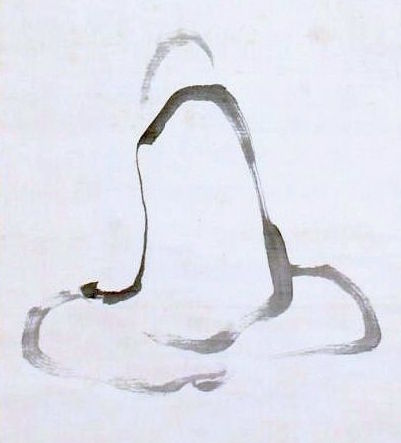
Knowing who we are in a given moment as well as having a sense of our longer-term journey and individuation process brings compassion and awareness into our work, facilitation, relationships and community life. Inner work is for personal meditation and exploration as well as a way for you to work on your own problems. And it is at the heart of a facilitator’s work, making it possible to work with individuals, groups, organisations or communities – This is because we are within a field that links us. Innerwork allows you to perceive field dynamics as they arise inside of you, and this helps you to perceive, interact with, and facilitate the dynamics going on around you.
Processwork UK holds seminars and Intensives on the theme of Innerwork. And Innerwork is a component of all seminars or Intensives.
Mindell A. Working on yourself Alone (Kindle) Mindell A. The Shaman’s Body (Kindle)
Psychotherapy and Personal Consultation
Processwork UK psychotherapists are accredited through UKCP, The UK Council of Psychotherapy. Processwork is a daughter of Jungian psychology, developed by Arnold Mindell, with roots in physics, systems theory and indigenous wisdom. Arny brought together mind and body, finding that ‘dreaming’ continues in the daytime, in our body experiences, symptoms and subtle signals, and in the disturbances we meet in life. Processwork helps us to become aware of those patterns to make them less difficult and more useful, in discovering one’s direction forward, even within difficult times. Sessions are for individuals and for relationship work, brief and long-term therapy and awareness practice.
Individual Processwork sessions
Some people want to further their self-awareness, personal or spiritual development, creativity and contributions to community. Or explore pathways forward when dealing with prejudice and marginalisation in their families, communities or workplace connected to gender, sexual orientation, race and religion, disability. Others look to therapy to help with difficulties in their personal, family or professional lives – conflicts at home or in the work place; depression or loss of orientation or meaning of life; self-esteem; addictions; eating issues, post-traumatic stress, abuse, anger, bullying, domestic violence, loneliness, wanting to find a partner, dealing with loss and grief and being overwhelmed with emotion or anxiety.
Relationship Work
Some issues that people bring to relationship work are: constant criticism, feeling oppressed or oppressive, getting caught in repeating arguments, addictions, domestic violence, or feeling unable to be ‘oneself’ or grow independently within a relationship.
Relationship work is not only for problems, however – but for discovering the creative patterns (or myth) that brought you together, and to find ways of following your own individuation and personal path, while also living and working in partnership in a creative way.
People also discover they are working with social and collective diversity issues within their relationship, such as gender dynamics, sexual orientation, and issues of class, race, ethnicity, or religion. Awareness can help work through relationship difficulties, disentangling issues, strengthening the relationship, and contributing to the community.
Worldwork and Community
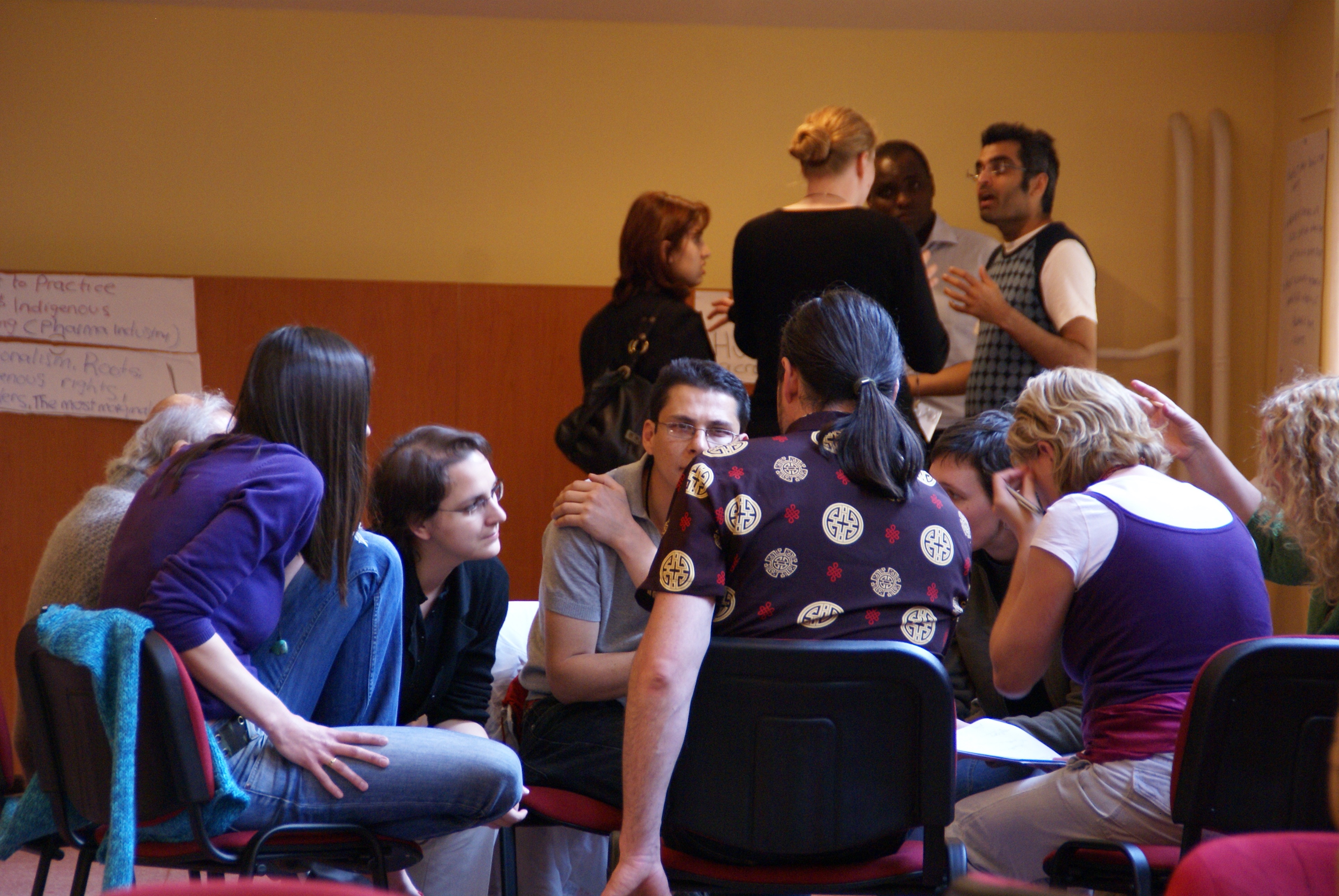
‘Worldwork’ is the application of Processwork to working with small and large groups, organisations, and community and international relations.
Its methodology and theoretical framework allow us to recognise how – as individuals, relationships, groups, organisations and communities – we are all interconnected. We are linked through our history, our current interactions and our shared future. Worldwork methods work with 3 dimensions: the issues and conflicts we have and our individual positions and historical experience (Consensus Reality); our feelings and roles that move and polarize us, that we share (Dreamland) and our underlying unity (Sentience).
‘Worldwork’ brings important contributions to diversity awareness, social inclusion, organisational development, and community dialogue, as well as to conflict resolution, violence prevention and restorative justice.
Community Dialogue and Open Forums on hot topics
This potential richness emerges by way of facilitated interactions, which include all voices, points of view, and dimensions of our experience, including those parts of our experience often marginalized, excluded or unseen.
Forums bring people together to have deeper dialogue about particular issues within community and to process the polarisations and conflicts, to find creative directions forward.
In the UK, some of our forum topics have included: asylum and refuge; racism; Islamophobia and xenophobia; anti-semitism; how we in the UK are linked to the conflicts in the Middle East; community mental health; ecology and the environment; community sustainability; gender; and sexual orientation. Forums sometimes occur in series over several months or years; others may be single evening events.
Diversity, structural discrimination and new approaches to democracy and leadership
Arny Mindell described our relative privileges in terms of ‘rank’ dynamics. These concern our social rank (linked to gender, race, religion, nationality, class, language, education, profession, sexual orientation, disability, health and age) as well as psychological rank (our relative privilege or sense of ease associated with self-awareness and feeling centered in the midst of difficulties) and spiritual rank (the sense of feeling connected to a spiritual source of strength, or the belief that ‘right’ is on your side.) As we interact, rank dynamics tend to be highly complex. You might be someone’s boss, giving you higher rank, yet have fewer social privileges related to your gender, race, or religion. Or you may have low social rank, but have high spiritual rank. Awareness of rank dynamics is extremely useful when facilitating awareness of diversity, conflict and problems of social exclusion.
Processwork facilitation methods based on ‘deep democracy’ and awareness of the different dimensions of our experience have been used effectively in a variety of situations to support community dialogue, and to support relationships between national and local government, NGOs, CSO’s and citizens, to explore the evolution of participative democracy and enabling social inclusion.
Some of the ways we have applied this work, among our colleagues internationally, includes facilitated gatherings of social movements, forums for working with history, conflict and finding new directions, town meetings focusing on youth violence, racism, attitudes concerning gender, sexual orientation and more.
Diversity Matters In Scotland, Processwork facilitators, Andy Smith and Pat Black worked over many years, in their previous organization Diversity Matters, working in collaboration with the Scottish government to strengthen networks and community for a more inclusive society.

– ‘Everyone Together’
CFOR Force for Change, founded by Arlene and Jean-Claude Audergon, has expertise in multicultural and international contexts, dealing with conflict resolution, community recovery, reconciliation and violence prevention and consults with individuals, organisations, communities and countries. They have offered Intensives in collaboration with Processwork UK, and an annual ‘Facilitation for Leaders’ training programme over many years. Together with partner organisations in different countries, they facilitate community forums, and train and mentor facilitators, working for peace-building and reconciliation. Methods of Processwork and ‘worldwork’ support awareness practice, in relation to inner work, relationships, organisational and community facilitation, and conflict resolution. www.cfor.info

Conflict resolution, post-conflict recovery and violence prevention
‘Worldwork’ is applied to conflict resolution, post-conflict recovery and violence prevention, working with youth, elders, NGOs, government organisations and international organisations, dealing with the legacy of war, tyranny and violence, and the need to rebuild relationships and community.
Some of the places this work has taken place among our colleagues internationally include Israel-Palestine, Ireland, UK, Kenya, South Africa, Russia, Croatia, Kosovo, Macedonia, Ukraine, Poland, Slovakia, Czech Republic, Greece, Spain, India, USA, Japan, Burma, the Philippines and more.
In the UK, CFOR (founded by Arlene and Jean-Claude) also focuses on:
- Facilitation for conflict resolution, post-conflict recovery and violence prevention and social inclusion.
-This programme began with four-day forums held twice a year (1996-2001, 2005-2012) in Croatia, with facilitated deep interactions among people of Serb, Croat, Muslim and other ethnic-national backgrounds, each with their own war experience. Forums included voices from NGOs, government, international organisations, local authorities and citizens – grappling with history, current relationships among the group present, and how to move forward together in society.
The programme also included Facilitation and ‘leadership’ training. Forums were co-facilitated by Arlene Audergon and Lane Arye from (1996-2001) and Arlene and Jean-Claude Audergon, in partnership with Association ‘Mi’, an NGO in Croatia and the UNHCR, UN High Commissioner for Refugees, and funded by Dutch, Belgium, Norwegian and Spanish governments, EIDHR European Institute for Democracy and Human Rights and the Millennium fund.
– CFOR is currently developing a programme of Forums and Training in collaboration with Innocent Musore, in Rwanda and the Great Lakes region, to work with processing the history of genocide, current issues in community recovery and creating the future. The programme includes people who have been perpetrators and victims – youth, elders, social workers, and a range of citizens interested in building the future.

– CFOR is currently continuing its project in South Africa, together with Lungile Nkosi-Hill, which started in the township of Chesterville, Durban – supporting community dialogue on the legacy of Apartheid and resulting projects for community recovery.
Mindell, A. Sitting in the Fire: Large group transformation using conflict and diversity, 1995.
Mindell, A. The Deep Democracy of Open Forums, Hampton Roads 2002
Mindell A. The Leader as Martial Artist: An Introduction to Deep Democracy, Harper 1992
Audergon, A. The War Hotel: Psychological Dynamics in violent conflict, Whurr/ Wiley 2005
Other publications and articles http://www.cfor.info/publications/
See also The Deep Democracy Institute http://www.deepdemocracyinstitute.org
Organisational Development
Processwork training supports you to understand why and how easy it is to fall into the soup you are trying to facilitate! Processwork facilitation supports organisations to re-connect to the underlying creativity and vision of their organisation, and at the same time to work with hotspots and conflicts related to diversity and power dynamics, as well as discovering and working with blocks and pathways to creativity.
Worldwork Training
Worldwork is a methodology, and is the name for an experiential training seminar in conflict work and community building. The seminar provides a unique opportunity for people from all over the world to come together in a powerful forum for focusing on and working with social, environmental, and political issues. Between 300-500 hundred people from over thirty countries participate in these 6 day gatherings. The large staff team facilitates a diversity of learning experiences that include large group focus and interaction, small group meetings, one-to-one sessions and networking groups.

See Amy Mindell’s collection of short animated videos on worldwork concepts: http://www.aamindell.net/worldwork-animated-film/
Past Worldwork Seminars
Worldword 2017, Porto Heli Greece, Worldwork 2014 Warsaw Poland, Worldwork 2011 Denver Colorado, USA, Worldwork 2008 London, UK, Worldwork 2006 Sydney, Australia, Worldwork 2004 Newport, Oregon, USA, Worldwork 2002 Eretria, Greece, Worldwork 1999 Washington DC, USA, Worldwork 1997 Mumbai, India, Worldwork 1996, Seaside, Oregon, USA, Worldwork 1994, Stupava, Slovakia, Worldwork Waldport, Oregon, USA, Worldwork 1992, Stoos, Switzerland, Worldwork 1991, Waldport, Oregon, USA.
Our Intensives have focused on ‘worldwork’ facilitation training for organisational and community development. It’s also an opportunity to work together on the issues we face collectively, to grapple with our history and create our future together.
Worldwork Photo gallery: http://worldwork.org/wp-content/uploads/ww/gallery2.html
Working with symptoms including serious illness
Working with symptoms including serious illness
Whether from your own personal and family experiences, or in your work as a health practitioner, you may have felt an underlying life force or sense of meaning that transcends everyday notions of good health. With Processwork tools and skills to observe and unfold information in the body – body signals and symptoms can provide a vital doorway to emerging patterns and one’s orientation to life’s next stages. This can reconnect you to your spirituality and sense of meaning and purpose.
Processwork makes a significant contribution to the field of bodywork and complementary healthcare – whether for one’s own personal development or to develop mind-body awareness for counselling, bodywork therapies, psychotherapy, palliative care. “In the late 1970’s, Arny discovered the ‘Dreambody’, the mirror connection between our night-time dreams and our body experiences.”
Mindell, Arnold Dreambody (Sigo 1982) KINDLE
Arnold Mindell, Working with the Dreaming Body (Routledge & Kegan Paul 1984) KINDLE
Mindell, Arnold Quantum Mind and Healing (Hampton Roads 2004) KINDLE
Audergon, Jean-Claude ‘The Body in Process Work’, in Totton, N (Ed.) New Dimensions in Body Psychotherapy, Open University Press/McGraw-Hill, London, 2005
Remote and Comatose states and Palliative care
Remote and Comatose states and Palliative care

The methods can be introduced to family members (See Amy Mindell’s A Healing Journey).
See Arny and Amy Mindell’s site with links of an interview of Arny Mindell from many years ago about his extraordinary work with remote and comatose states.
Part I https://www.youtube.com/watch?v=Z8rXSBr6np4
Part II https://www.youtube.com/watch?v=gWd_kqUBa_c
Part III https://www.youtube.com/watch?v=6nc2H522Uoc
See also:
Arnold Mindell: Coma, Key to Awakening, 1994
Amy Mindell: Coma: A Healing Journey, 1999 (Great guide for families)
Ammann, Peter: Reaching out to People in Comatose States (2012)
Mental Health and Extreme States
Mental Health and Extreme States
Processwork methods support accurate observation about what is occurring and how to support the process to evolve with more awareness. One of the stunning things about Processwork is that with accurate attention to the signals unfolding in front of you, you can follow and better appreciate such a wide range of human experiences.

Working with people with difficult states that bring diagnoses of mental disorders, Arny showed how we might follow and unfold the process. For example, someone feels depressed, his eyes cast down – he may need support to go more fully internal, to feel and believe in his innermost experience. Or if someone is manic, calling people at all hours of the night about heroic ideas of saving the world, she may need to believe in and bring to fruition her creative energy and interest in the world. This is not to make it simplistic. Quite the contrary. Complex dynamics are at work – both intra-psychic (inside the person), and within the system dynamics of family and community. In his early work, Arny recognised that people with extreme states that bring diagnoses of mental disorders may be carrying processes that are marginalized in the wider society. The title of his book on extreme states, City Shadows, describes this idea. This relates, but is different to RD Laing’s recognition that being adapted to our insane society is not exactly good mental health! Mindell’s idea was that these extreme states carry patterns and directions needed not only by the individual suffering these experiences, but by all of us in society.
Jean-Claude Audergon together with Arlene Audergon worked for many years applying and teaching Processwork within a psychiatric hospital in Haywards Heath. RSPOPUK seminars were held twice a year for ten years for psychiatric professionals, students and patients. These were terribly exciting events, on the cutting edge – and a stretch for all of us in our learning. Later, they led a series of forums on mental health, held within psychiatric institutions. Some focused on the relationship between management and service providers. Others included service users, medical professionals, institutional management, family members, and community service providers such as the police, housing associations, or social services.
Processwork therapists are trained to work with difficult experiences together with those clients and families who are interested to learn from their experiences too.
Mindell A. City Shadows, Routledge Kegan and Paul, 1988
Audergon, A. and JC, ‘Looking for Unicorns: Processwork at the Princess Royal Hospital, Haywards Heath, published in The Journal of Process Oriented Psychology, V 6.1 ‘Extreme States of Consciousness’ 1994
See also Will Hall’s work with Mental Health and Extreme States.
Processwork and the arts
The links between Processwork and the arts has been very exciting – including music, visual arts, writing, poetry, theatre, directing, dance, improvisation and puppetry. Processwork methods are based in unfolding the creative process in nature.
Processwork and the arts
Over the years Processwork practitioners, internationally, have enjoyed and developed the link between Processwork and the arts. Several of our colleagues internationally are involved in visual arts, writing and poetry, music, dance, performance and theatre.
Here in the UK, there is a rich focus on Processwork and the arts.
Margaret Godwin has been a landscape painter for 25 years as well as Processwork psychotherapist.
‘My paintings are most successful when I respond to an impulse or energy from the environment or landscape, which occurs at the beginning of the painting. In Process Work terms this is a “flirt” containing energy and relationship potential…’

Helen Wells lives in Norwich. She generously acted as Secretary for the RSPOPUK committee for many years. Helen completed her studies in Processwork and practiced for years as a psychotherapist within the NHS, but now devotes herself full time to her artistic work, as painter and filmmaker. The painting here of the teacups expresses the ‘infinite in the everyday’.
Jean-Claude Audergon and Arlene Audergon developed the Arts Atelier, and have worked closely over the years with a wide range of writers, visual artists, opera singers, improvisers, theatre directors, actors, puppeteers, musicians, dancers and a section of an orchestra. They also have enjoyed working over the years with Impropera, an improvisational opera company. Arlene co-directed Spirit with Julian Crouch, which was co-devised with Improbable theatre (Julian Crouch, Phelim McDermott, Lee Simpson and Guy Dartnell), which played at the Royal Court Theatre and toured internationally. Over the years she’s worked with a range of theatre practitioners and companies – recently with Christopher Leith, master sculptor and puppeteer, in his last work, directing and even performing in Lazarus, just before he died due to ALS. (A show he had also worked on many years before his illness in the Arts Atelier).

Phelim McDermott has been inspired by Processwork over the years. His company, Improbable, has produced a number of shows including 70 Hill Lane, Lifegame, Animo, Coma (about Mindell’s Coma work),Spirit, Sticky and more…Phelim also directed Philip Glass’ Satyagraha and Mozart’s Così Fan Tutte in collaboration with the English National Opera and the Metropolitan Opera. In 2003 Phelim was awarded a National Endowment for Science, Technology and the Arts fellowship to research new ways of rehearsing and creating theatre using improvisation and process-oriented conflict facilitation techniques.
Some people study Processwork in order to apply it to the arts. Students of Processwork include Sonia Slany, composer and musician. She plays violin with Mahatma, and with her husband Paul Clarvis founded Village Life to record music of all genres. She’s also a busy session musician for film soundtracks. Paola Esperson is an educator focusing on diversity and disability, a music therapist, and composer. Asha McCarthy is a music teacher, as well as a composer and performer, who focuses on north Indian classical music on the cello.

Arye, Lane, Unintentional Music: Releasing your deepest creativity, 2002
Mindell, Amy, The Dreaming Source of Creativity, LaoTse Press, 2005
Public Complaints Procedure